How Cohoist AI Builds Your Entire Operational Backbone using Natural Language
For many nonprofit leaders, the dream of a perfectly organized organization often crashes against the reality of administrative setup. You know exactly what your program needs to succeed: specific intake questions, defined assistance categories, clear service milestones, and meaningful reports for your funders. But translating that vision into a functional database feels like learning a foreign language.
Traditional case management systems often require weeks of technical configuration, expensive consultants, or months of painful manual data entry before you can even begin serving your first client. This creates a dangerous gap between launching a new initiative and actually measuring its impact.
The Hidden Cost of Manual System Setup
When a new program launches-whether it's a sudden emergency food program or a long-planned workforce development initiative-the administrative burden can be overwhelming. Most organizations face three specific hurdles during this phase:
- The Configuration Trap: Spending more time building forms and dropdown menus than actually planning program delivery.
- Fragmented Data Silos: Starting with spreadsheets because the official system is too hard to set up, which means your data is already broken before you even begin.
- The Reporting Lag: Realizing six months later that you didn't collect the specific data point a major funder requires, forcing you to guess at your impact.
The goal shouldn't be to become a database administrator. Your team's expertise lies in human services, not system architecture. The real challenge is finding a way to bridge the gap between your program's mission and the digital tools needed to track it.
Moving from Description to Infrastructure
Imagine if instead of clicking through endless menus to create a new service category, you could simply describe what you do. What if you could type, "We provide emergency rental assistance and weekly food pantry access for families in crisis," and have a system respond by building your intake forms, tracking your inventory, and preparing your reports?
This shift from manual configuration to natural language instruction is changing how social service agencies operate. By using AI to interpret the specific needs of a program, organizations can move from concept to execution in minutes rather than months.
This approach allows you to focus on the logic of your work:
- What questions do we need to ask at intake?
- What specific resources are we distributing?
- What does success look like for our clients?
How Cohoist Automates Your Foundation
This is where Cohoist changes the equation. We built Cohoist to understand the language of nonprofits, not just the language of data. Instead of forcing you to adapt to a rigid system, we use AI to build a system that adapts to you.
When you start a new program in Cohoist, you don't begin with a blank screen. You begin with a conversation. Through our AI-powered onboarding, you simply describe your program's mission and activities.
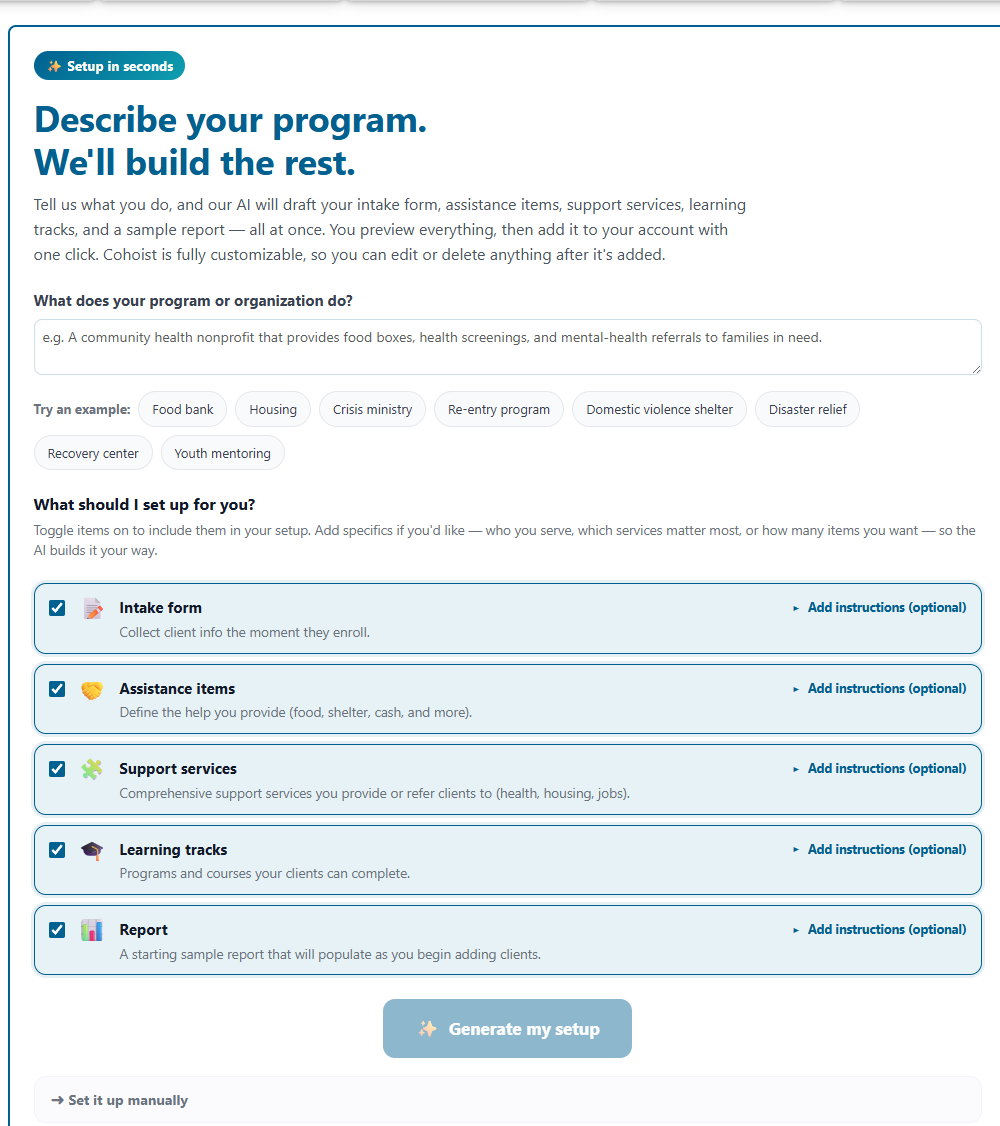
As you type your description, Cohoist's AI works behind the scenes to draft your entire operational backbone. It automatically generates your custom intake forms, identifies necessary assistance items, defines support services, creates learning tracks for training programs, and even drafts the framework for your impact reports.
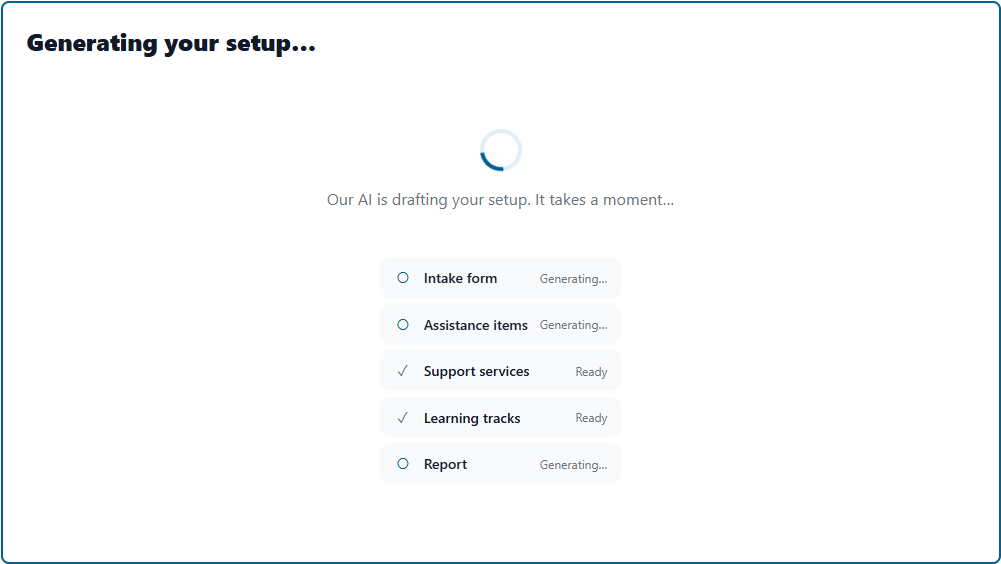
You can watch the progress in real-time as the system builds out each component, ensuring that your digital infrastructure is ready to support your frontline staff immediately. This isn't just about saving time; it's about ensuring that your data collection is accurate and funder-ready from day one.
Turning Automated Setup into Real-World Impact
The true value of an AI-built foundation isn't just in how fast it's created, but in how well it performs once your team starts using it. Because the system was built based on your specific program description, the data flows naturally from intake to reporting without the usual administrative friction.
Once your staff begins logging services, the system automatically organizes that information into actionable insights. For example, a housing program can instantly see how many clients moved from transitional to stable housing through simple outcome tracking.
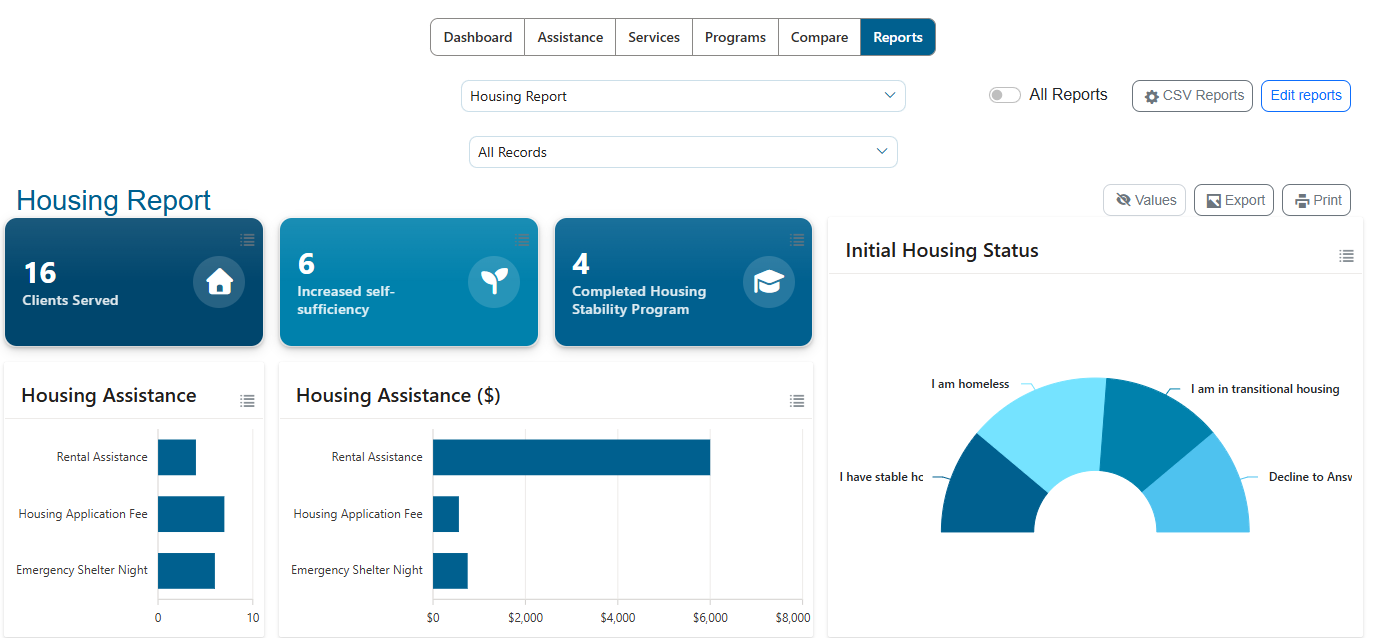
Because the AI helped establish the right metrics during setup, your leadership team gains immediate visibility into program performance, financial assistance distribution, and client outcomes. You no longer have to spend days at the end of a quarter trying to piece together what happened; you can rely on a secure AI report builder to provide answers instantly.
This seamless connection between daily casework and high-level reporting allows your organization to spend less time on busywork and more time on the mission that matters.
If you're ready to see how easy it is to transform your program description into a fully functional management system, we'd love to show you around. You can schedule a personalized walkthrough with Cohoist here.
Ready to put this into practice?
Cohoist gives your team clean intake, fast service tracking, and funder-ready reports — without the clutter of traditional systems. See how simple it can be.