Why Holistic Service Tracking Matters for Faith-Based Programs
In faith-based ministries and community outreach programs, the goal is rarely just to "process" a person. Whether you are providing emergency food assistance, job placement training, or long-term wrap-around support, your mission is to see the whole person.
However, when the administrative side of that mission becomes fragmented, it creates a barrier between your team and the people you serve. If a volunteer knows a family is struggling but can't see the notes from the last visit, or if a case manager provides a meal voucher but doesn't know the client is also seeking employment help, the "holistic" part of your care begins to slip. This often happens because of the volunteer-staff divide where information isn't shared seamlessly across the team.
Holistic service tracking is the practice of connecting every interaction, resource, and milestone into a single, unified narrative. Here is why this approach is essential for modern faith-based programs.
Moving Beyond "One-Off" Interactions
Many community ministries excel at "one-off" assistance-providing a coat in the winter, a meal during a crisis, or a one-time financial gift. While these are vital, they are often tracked in isolation.
To provide true holistic care, you need to distinguish between immediate assistance and long-term support. For example:
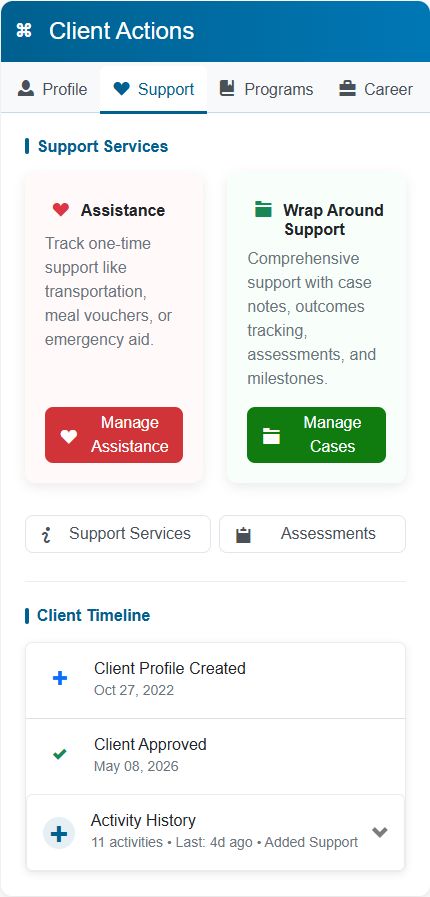
- Assistance: One-time support like transportation, meal vouchers, or emergency aid.
- Wrap-Around Support: Comprehensive, ongoing care involving case notes, outcome tracking, assessments, and milestones.
By categorizing these differently in your system, you can ensure that a client receiving emergency aid is also being screened for the long-term support they might need to achieve stability.
Creating a Unified Client Story
When a client interacts with multiple departments-such as a food pantry, a job training workshop, and a counseling ministry-their story shouldn't be told in three different places.
A holistic tracking system creates a "single source of truth." When a staff member opens a client profile, they should see a chronological timeline of every touchpoint. This prevents the "re-telling" of stories, where a client has to repeat their trauma or history to three different people. Instead, it allows your team to say, "I see you received help from our food pantry last week; how can we help you with your job application today?"
Standardizing Care with Service Checkpoints
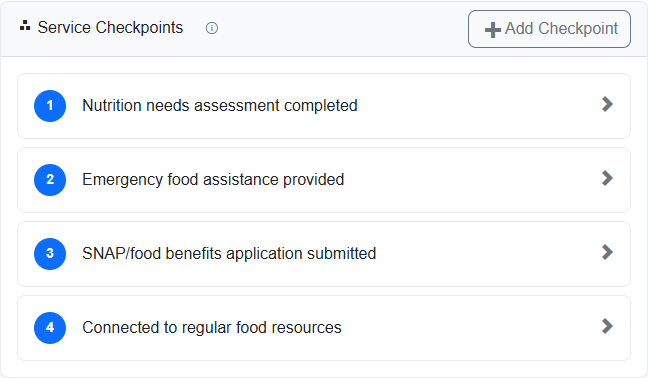
Holistic care doesn't mean "improvisational" care. For a program to be scalable and effective, it needs a roadmap. If you are helping a family navigate food insecurity, there are logical steps to that journey: an initial assessment, providing emergency aid, helping with SNAP applications, and finally connecting them to long-term resources.
By using service checkpoints, you ensure that every client receives a consistent standard of care, regardless of which staff member is assigned to their case. It turns a complex process into a manageable sequence of milestones.
Reducing Friction for Frontline Staff
The biggest threat to holistic care is the unseen admin burden on faith-based teams. If it takes a staff member ten minutes of data entry to log a five-minute interaction, they will eventually stop logging the details.
To maintain a holistic view, the software must be "refreshingly simple." It needs to allow for:
- Quick service logging that doesn't interrupt the flow of conversation.
- Clear visual distinctions between different types of support.
- Automated reminders so that follow-ups don't fall through the cracks.
When the technology feels like a helper rather than a hurdle, your team can spend more time looking people in the eye and less time looking at a screen.
Tailoring the System to Your Specific Needs
Every ministry is unique. A workforce development program has different needs than a homeless outreach ministry. Holistic tracking should be flexible enough to accommodate your specific "rules" of engagement.
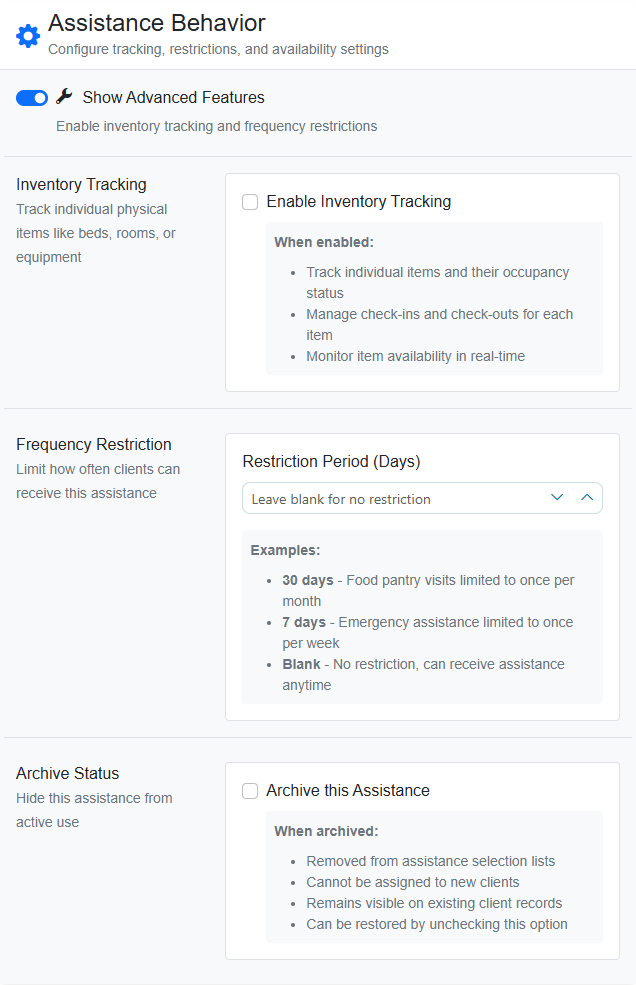
For instance, you might need to track physical inventory (like donated goods) or set frequency restrictions to ensure resources are distributed equitably. A good system allows you to configure these behaviors-like inventory tracking or visit limits-without needing a developer to change the code.
From Intake to Impact
Ultimately, holistic tracking is about the "clearer path from intake to impact." When you track every service, note, and milestone in one place, you aren't just organizing data; you are gathering evidence of your ministry's success.
Instead of guessing how many people you helped, you can show funders and your congregation exactly how many families moved from emergency assistance to stable employment. You move from reporting on activities to reporting on outcomes.
If you're looking for a way to simplify your case management software and get a clearer view of your program's impact, you can explore our pricing plans to find the right fit for your team.
Ready to put this into practice?
Cohoist gives your team clean intake, fast service tracking, and funder-ready reports — without the clutter of traditional systems. See how simple it can be.