Why AI-Driven Program Design Is the Future of Nonprofit Case Management
When a nonprofit launches a new initiative-whether it is a workforce development program, a food security intervention, or a re-entry pathway-the first challenge isn't just delivering services. It is designing the framework that makes those services measurable, repeatable, and sustainable.
Traditionally, program design has been a manual, grueling process. Program managers sit down with spreadsheets, paper outlines, and years of institutional memory to map out what a client should experience from intake to completion. This process is often slow, prone to human error, and difficult to scale when funding increases or staff changes.
As the social services landscape becomes more data-driven, the gap between how programs are designed and how they are reported is widening. To close that gap, organizations are beginning to look toward AI-driven design-not to replace human expertise, but to accelerate it.
The Hidden Cost of Manual Program Architecture
Most nonprofit teams operate on a cycle of reactive design. When a new grant arrives, the team rushes to build a workflow that meets the funder's requirements. This often leads to several operational bottlenecks:
- Fragmented Workflows: Steps that should be connected-like an initial assessment leading directly to a specific resource-are often disconnected, requiring manual intervention.
- Inconsistent Service Delivery: Without a structured roadmap, two different case managers might deliver the same service in two completely different ways, making it impossible to track true program efficacy.
- The Reporting Lag: Because the program wasn't designed with data collection in mind, staff must spend hours after the fact trying to reconstruct what happened to produce a report.
When program design is treated as an afterthought rather than the foundation, the entire organization pays the price through administrative burnout and diluted impact.
Moving from Static Outlines to Dynamic Pathways
The future of effective case management lies in moving away from static documents and toward dynamic service pathways. A dynamic pathway is a structured sequence of milestones that guides both the staff member and the client through a journey.
For example, in a wrap-around support program, a client's journey shouldn't be a mystery. It should be a visible series of checkpoints. When a program is designed with these milestones built-in from day one, staff can monitor progress in real-time.
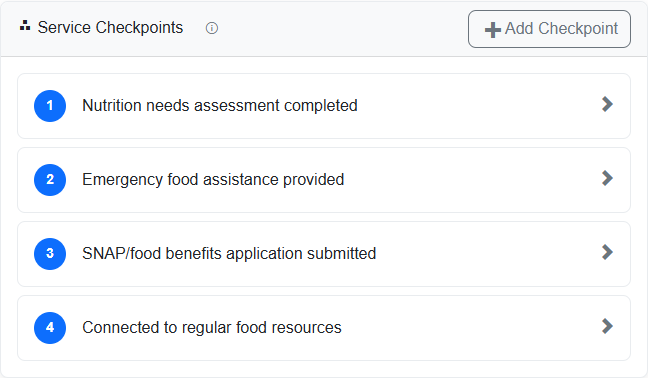
By defining these checkpoints during the design phase-such as completing an assessment, submitting a SNAP application, or connecting with a resource-you transform abstract goals into concrete, trackable data points. This ensures that no client falls through the cracks and that every service delivered is a step toward a documented outcome.
How AI Accelerates Program Implementation
This is where AI-driven design changes the equation. Instead of starting with a blank spreadsheet, program managers can use AI to build an entire operational backbone based on their specific goals.
Imagine telling a system: "I need to build a re-entry career pathway program for young adults." An AI-driven tool can immediately propose a structured curriculum, suggesting specific modules like job readiness training, interview coaching, and long-term mentorship.
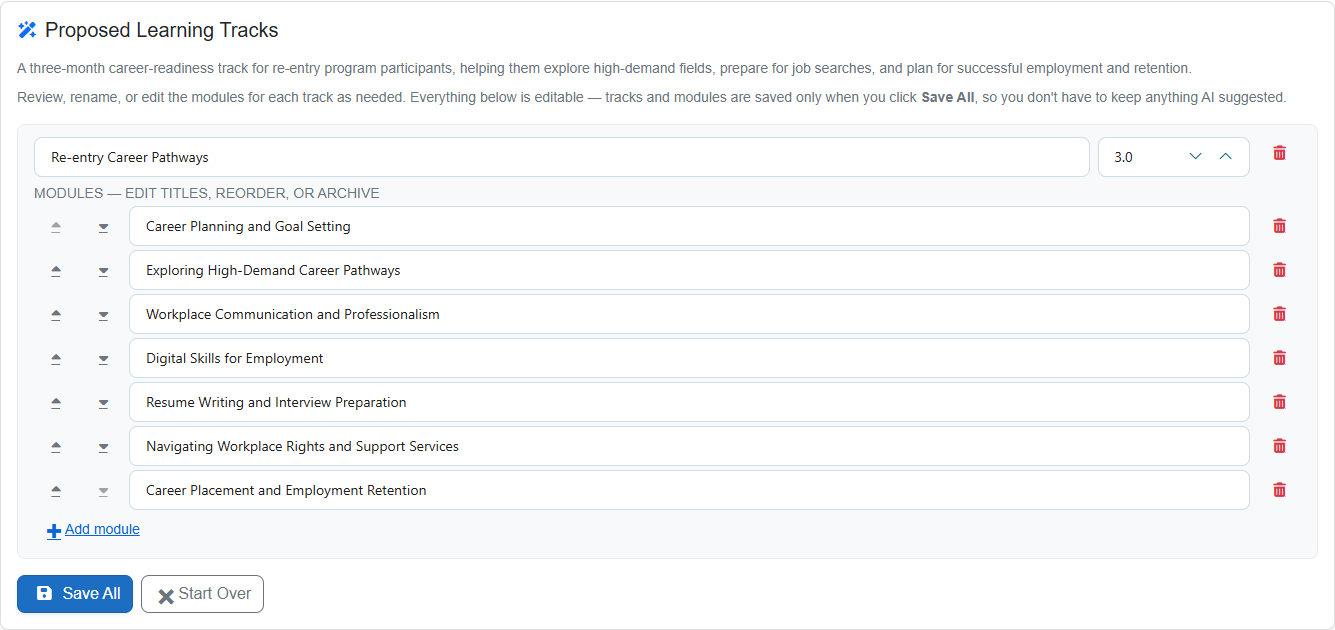
The real value here isn't that the AI does the work for you; it's that it provides a sophisticated starting point. As seen in the interface above, staff can review these AI-generated suggestions, reorder modules, add new steps, or delete what doesn't fit their community's specific needs. This shifts the staff's role from "builders of tedious forms" to "architects of meaningful interventions."
This speed of design allows nonprofits to be more agile. When community needs shift, you can redesign your service pathways in hours rather than weeks.
Closing the Loop: From Design to Impact Reporting
The ultimate goal of any program design is to prove that it works. When you design your program using structured, AI-assisted workflows, your reporting becomes an automatic byproduct of your daily work rather than a separate, painful task.
Because every service is logged against a specific milestone and every client progresses through a predefined pathway, the data required for funder reports is already collected. You don't have to ask staff to remember what they did three months ago; the system already knows.
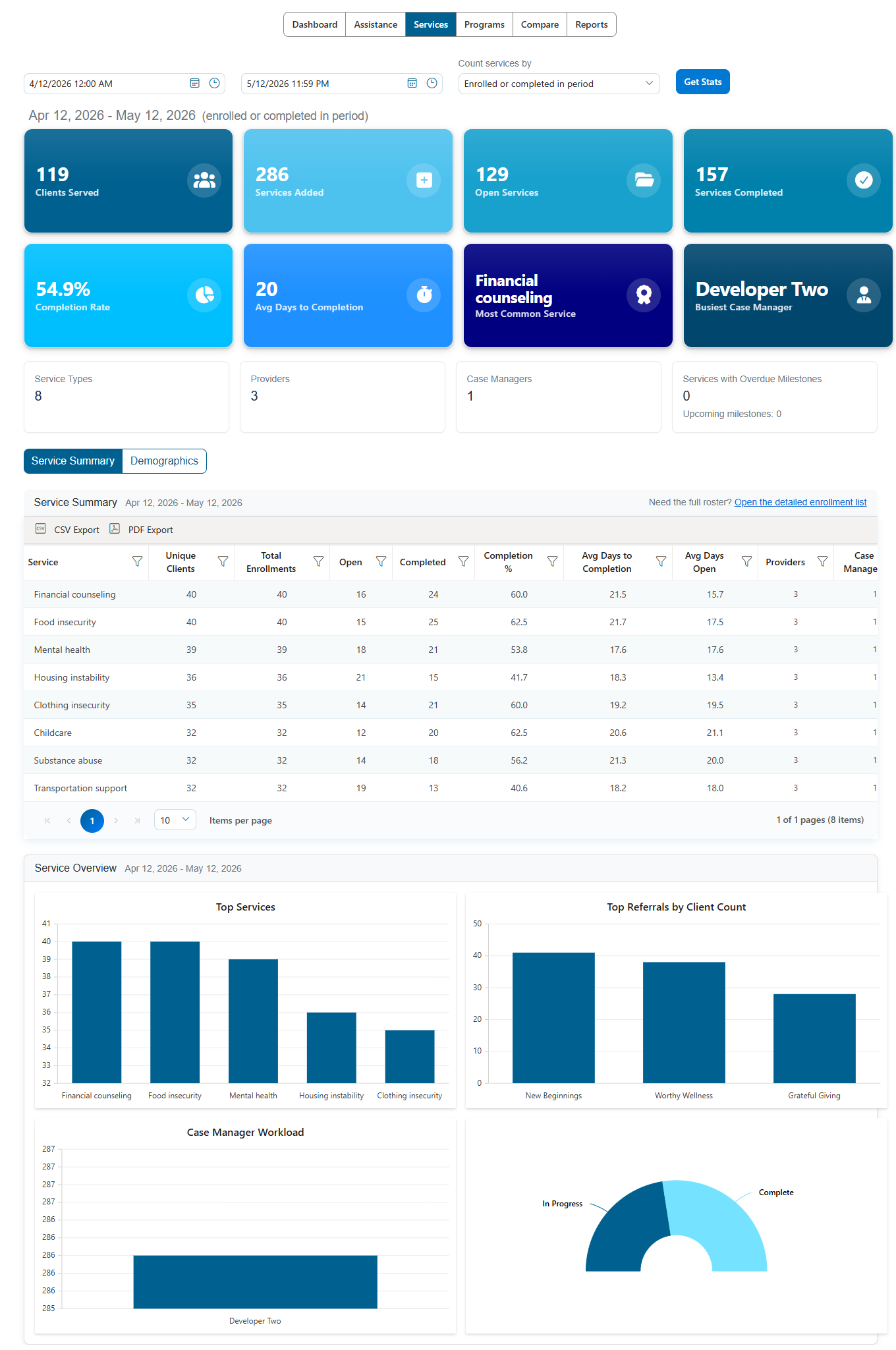
This level of visibility allows leadership to see exactly how many clients are being served, what the most common services are, and what the completion rates look like. When your program design is intelligent, your dashboards become clear, actionable windows into your organization's impact.
Cohoist was built to bridge this gap between daily casework and high-level impact. By combining intuitive design with powerful automation, we help nonprofits move away from cluttered legacy systems and toward a future where program design is fast, flexible, and built for results.
If you're ready to see how a modern approach to case management can transform your operations, we'd love to show you around. You can schedule a personalized walkthrough with our team here to see how Cohoist can support your specific mission.
Ready to put this into practice?
Cohoist gives your team clean intake, fast service tracking, and funder-ready reports — without the clutter of traditional systems. See how simple it can be.