The Hidden Costs of Scattered Client Data in Growing Nonprofit Programs
When a nonprofit first launches a program, the workflow is often simple. A case manager might use a spreadsheet, a shared drive, or even pen and paper to track client interactions. It feels manageable because the volume is low, and the team is small.
But as funding increases and waitlists grow, that initial simplicity becomes a liability.
The problem is rarely a lack of staff dedication. It is usually a lack of a single source of truth. When client data lives in disparate places-email inboxes, local Excel files, physical folders, and disparate software tools-the organization begins to incur "hidden costs." These are not always financial line items you can see on a balance sheet, but they drain time, morale, and impact.
This article explores the specific operational fractures that occur when client data is scattered, and how to identify if your organization is already paying these costs.
The Time Tax of Context Switching
For frontline staff, the most immediate cost of scattered data is time.
When a case manager needs to prepare for a client meeting, they must gather information from multiple sources. They might check the intake form in one system, look for service logs in another, and search email threads for recent communications. This process of hunting and gathering is known as context switching.
Research in cognitive psychology shows that every time a person switches tasks, there is a "switch cost." The brain takes time to disengage from the previous task and re-orient to the new one. In a nonprofit setting, this might look like:
- Opening a CRM to pull demographic data.
- Switching to a document management system to find signed agreements.
- Checking a separate calendar tool for appointment history.
- Searching an email inbox for the latest client note.
If this process takes 15 minutes per client, and a case manager sees 10 clients a day, that is 2.5 hours of lost productivity daily. Over a year, that is nearly 600 hours per staff member. That is time taken away from direct client support and added to administrative burnout. For many organizations, this type of inefficiency is a primary reason why most nonprofits waste 20+ hours a week on admin instead of mission work.
The Risk of Duplicated Effort and Data Errors
Scattered data often leads to duplicate records. When intake forms are not centralized, it is easy for the same individual to be entered into the system multiple times under slightly different names or contact details.
This creates two distinct problems:
- Inaccurate Reporting: Leadership cannot trust the headcount. If "Jane Doe" appears as three different records, the organization may report serving 300 clients when it actually served 298. This impacts funder confidence and strategic planning.
- Service Duplication: Case managers may unknowingly provide overlapping services because they cannot see the full history of what has already been delivered. This wastes limited resources and can confuse the client, who receives inconsistent messaging.
Identifying and cleaning up these duplicates is a manual, tedious process that falls on already overworked staff. It is a reactive measure rather than a proactive strategy. Many teams struggle with this issue, often unaware of the silent signs that manual client tracking is causing them to lose impact.
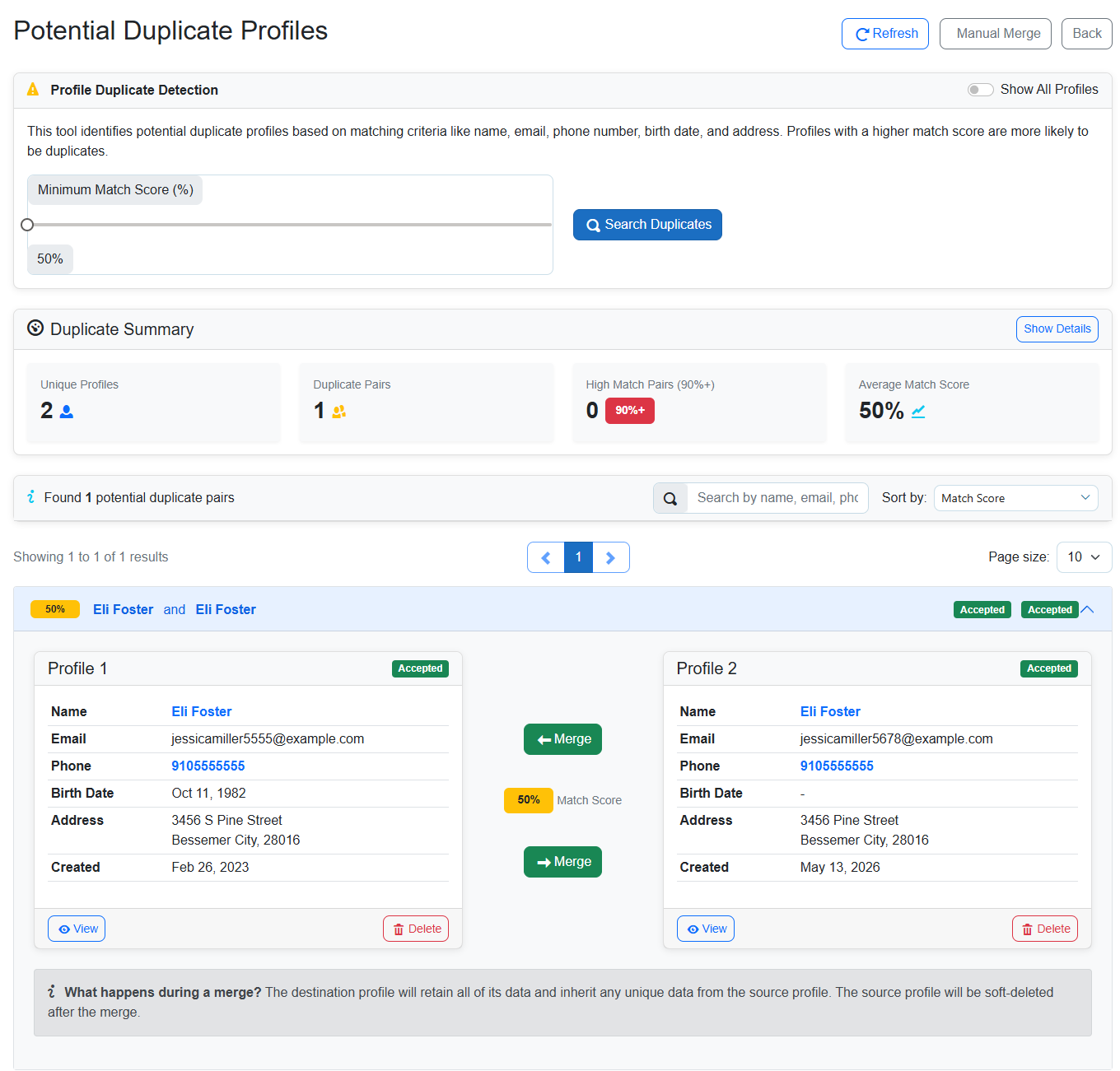
The image above illustrates a dedicated tool for identifying and managing duplicate client profiles. It shows a side-by-side comparison view with match scoring, allowing staff to merge records efficiently. This kind of functionality prevents the data hygiene issues that plague spreadsheets and siloed systems. If you are dealing with these issues, learning how duplicate client records are wasting nonprofit time and money (and how to stop it) can provide a clear path to resolution.
The Funder Readiness Gap
Nonprofits are increasingly held accountable for outcomes, not just outputs. Funders want to know not just how many people were served, but what changed in their lives.
When data is scattered, generating these reports is a nightmare. Staff must manually extract data from various sources, clean it, and format it into a narrative or chart. This process is:
- Slow: It can take weeks to compile a quarterly report.
- Error-Prone: Manual data entry increases the risk of mistakes.
- Inconsistent: Different staff members may interpret data fields differently, leading to inconsistent reporting standards.
This "funder readiness gap" can delay grant renewals or make it difficult to secure new funding. Leadership is left without real-time visibility into program impact, forcing them to rely on outdated or incomplete information for decision-making.
The Onboarding Burden for New Staff
High staff turnover is common in the nonprofit sector. When new staff join, they need to get up to speed quickly.
If client data is scattered across multiple systems with complex, unintuitive interfaces, the training period extends significantly. New hires must learn:
- Where to find specific types of information.
- How to navigate multiple logins and interfaces.
- The informal "tribal knowledge" of where data actually lives.
This slows down their ability to contribute meaningfully and increases the likelihood of errors during their early months. A fragmented tech stack raises the barrier to entry for new staff, making retention more difficult.
Building a Single Source of Truth
The solution to these hidden costs is not necessarily buying more software. It is about consolidating data into a single, coherent system that supports the actual workflow of case management.
A unified platform should allow staff to:
- View the Full Client Story: All interactions, notes, documents, and service history in one place.
- Log Services Quickly: Reduce the time spent on data entry so staff can focus on clients.
- Generate Reports Automatically: Turn everyday casework into funder-ready insights without manual compilation.
- Maintain Data Integrity: Prevent duplicates and ensure consistent data entry.
How Cohoist Addresses These Operational Fractures
Many nonprofits struggle with legacy systems that are feature-bloated and difficult to navigate. Cohoist was built specifically to address the friction points described above. It offers a refreshingly simple case management experience that connects intake, service tracking, notes, and reporting in one clean system.
From the moment an admin sets up the platform, the focus is on ease of use. The onboarding dashboard guides users through setup, ensuring that critical configurations like intake forms and dashboards are ready to go.
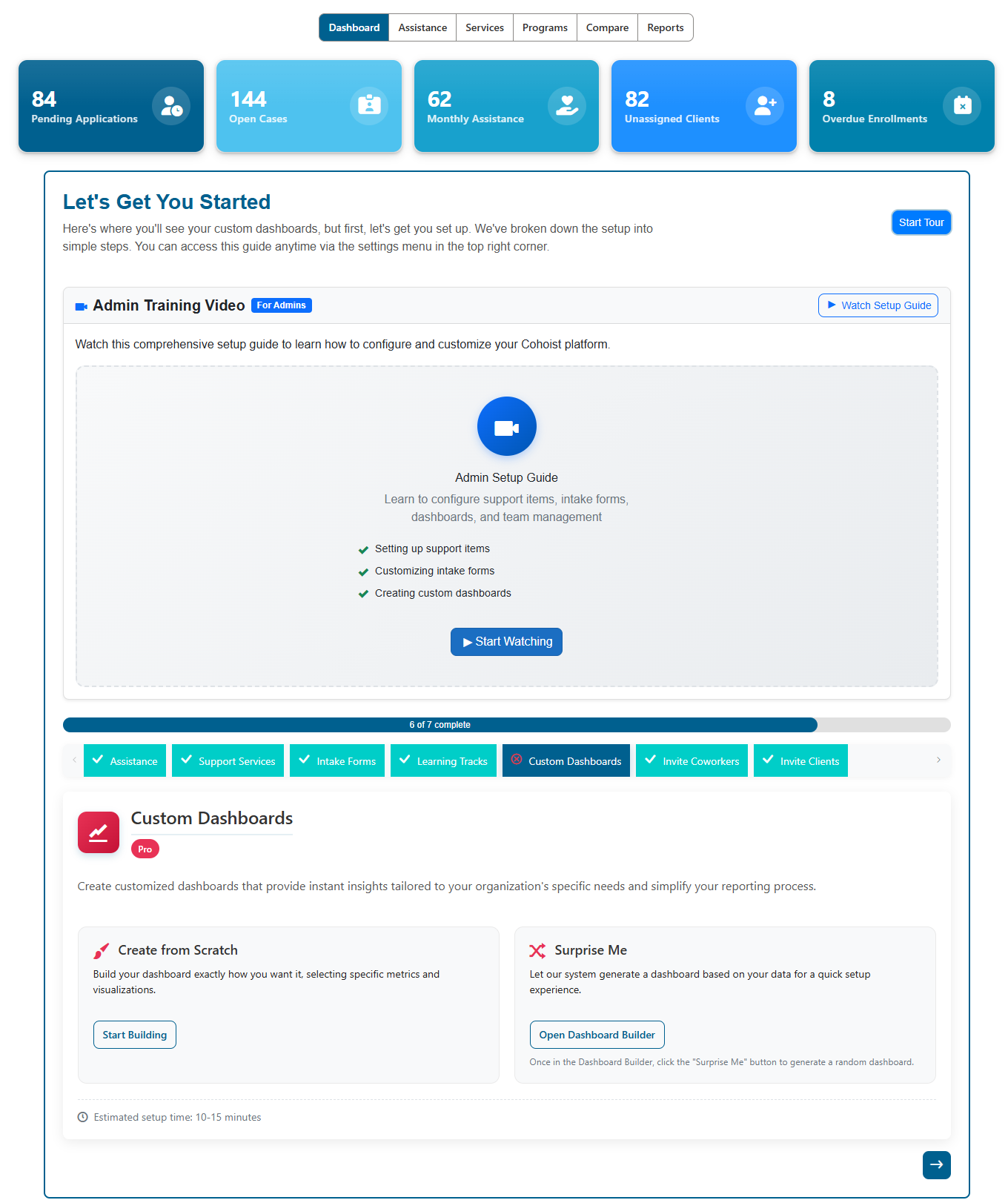
The screenshot above shows the Cohoist onboarding dashboard. It features a step-by-step progress tracker, metric cards for key activities, and guided tutorials. This design reduces the technical barrier to entry, allowing teams to launch faster with less training overhead.
For case managers, the client table provides a comprehensive view of all records, with easy filtering and export capabilities. This ensures that data is accessible and manageable, reducing the time spent searching for information.
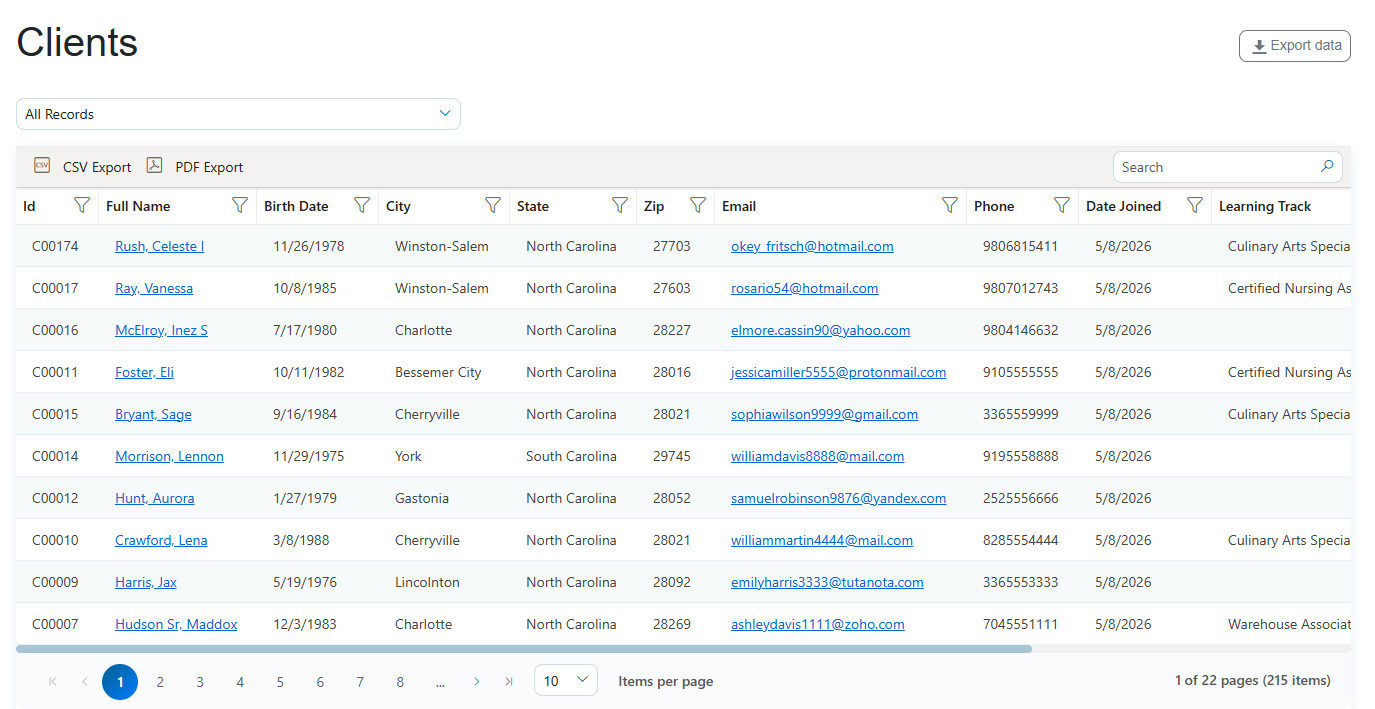
By centralizing data, Cohoist helps organizations eliminate the hidden costs of scattered information. It provides a clearer path from intake to impact, allowing staff to do more with less busywork.
Moving Forward
If your team is spending more time managing data than serving clients, or if you are unsure of your program's true impact due to fragmented records, it may be time to evaluate your current tools.
You do not need to accept complexity as the price of growth. There are modern, intuitive solutions designed to simplify your workflow and clarify your impact.
To see how a unified, simple approach can transform your case management operations, explore the options available at https://cohoist.com/pricing.
Ready to put this into practice?
Cohoist gives your team clean intake, fast service tracking, and funder-ready reports — without the clutter of traditional systems. See how simple it can be.