7 Silent Signs Your Nonprofit Is Losing Impact Because of Manual Client Tracking
You started your nonprofit to make a tangible difference. You see the need, you secure the funding, and you put dedicated staff in the field. But somewhere between the intake forms and the quarterly reports, the connection between your daily work and your measurable impact starts to fray.
For many social service agencies, the culprit isn't a lack of passion or resources. It is the friction of manual client tracking. When case managers spend more time typing into spreadsheets than talking to clients, data becomes stale, incomplete, and unreliable.
If you are wondering why your impact reports feel like a scramble rather than a summary, you might be experiencing one of these silent signs. Recognizing them is the first step toward reclaiming your time and your data integrity.
1. Your "Total Clients Served" Number Feels Like an Estimate
Leadership often asks for a simple metric: How many people did we help this month? In a manual system, the answer is rarely immediate. It requires opening multiple spreadsheets, cross-referencing client IDs, and manually counting rows.
This delay creates two problems. First, you cannot answer funder questions in real-time. Second, the data is often outdated by the time it is compiled. If a client receives services on Tuesday but the caseworker doesn't log it until Friday, that week's data is inaccurate.
Over time, this leads to "data drift," where your reported impact slowly diverges from reality. You might be serving more people than you think, or fewer, but you lack the single source of truth to know for sure.
2. Caseworkers Are Spending Hours on Data Entry, Not Case Management
The most valuable resource in your agency is your staff's time with clients. Yet, many teams spend 30 to 50 percent of their workweek on administrative tasks. This includes:
- Manually typing client details from paper intake forms into digital systems.
- Searching through email chains or shared drives to find a client's history.
- Creating separate logs for different funders, often duplicating the same effort.
When data entry becomes a burden, staff burnout increases. Turnover rises. And the quality of care drops because your case managers are exhausted by bureaucracy rather than empowered by tools. This is a classic example of why most nonprofits waste 20+ hours a week on admin instead of mission work.
3. Your Impact Reports Are Built from Scratch Every Quarter
If your quarterly or annual impact report feels like a major project rather than a routine update, your workflow is broken. In a manual environment, generating a report means:
- Exporting raw data from spreadsheets.
- Cleaning the data to remove duplicates or errors.
- Manually calculating totals and percentages.
- Formatting charts and graphs in a separate tool.
This process is prone to human error. A misplaced decimal or a missed row can skew your entire narrative. Furthermore, it delays your ability to share success stories with donors when the news is fresh.
4. Client History Is Fragmented Across Multiple Systems
A client's journey doesn't fit neatly into one spreadsheet. You might track attendance in one file, financial assistance in another, and case notes in a third. When a caseworker changes or a client returns after a long gap, that history is lost or buried.
This fragmentation creates a poor client experience. Clients have to repeat their stories multiple times. It also makes it difficult to see the full picture of a client's progress. Did they complete the housing workshop? Did they receive food assistance last month? If the data is siloed, the answer is "I don't know." The hidden costs of scattered client data in growing nonprofit programs are significant, draining both staff time and program impact.
5. You Are Missing Critical Follow-Ups
Manual tracking makes it nearly impossible to automate follow-ups. If a client hasn't checked in for two weeks, or if a service milestone is approaching, there is no automatic alert to the caseworker.
These missed connections are silent opportunities lost. A client who falls through the cracks may not receive the support they need, leading to worse outcomes and lower satisfaction. In a digital system, these triggers can be set once and run automatically, ensuring no client is forgotten.
6. Your Data Is Vulnerable to Human Error
Spreadsheets are fragile. A single typo in a client ID can link two different people's records. A deleted row can erase months of history. Without version control or audit trails, it is difficult to trace where errors occurred or who made them.
For nonprofits handling sensitive personal information, this risk is compounded. Manual systems often lack robust security features, role-based access controls, and data encryption. This exposes your organization to compliance risks and potential data breaches.
7. You Cannot Prove ROI to Funders Quickly
Donors want to know their money is working. They want to see clear, concise evidence of outcomes. If your agency struggles to pull accurate, timely reports, you risk losing funding to competitors who can demonstrate impact more effectively.
Modern funders expect transparency and speed. They want to see dashboards, not spreadsheets. They want to see trends, not static numbers. If you cannot provide this, you are leaving money on the table.
Breaking the Cycle with Simpler Tools
The good news is that you do not need a complex, enterprise-level system to fix these issues. You need a tool that respects your workflow and reduces busywork.
This is where Cohoist comes in. Cohoist is designed specifically for nonprofits that want to move away from manual tracking without the steep learning curve of traditional case management software. It focuses on simplicity, speed, and clarity.
For example, in addition to logging assistance using simple forms, Cohoist allows staff to log assistance quickly using barcode scanning. This eliminates manual data entry errors and speeds up the documentation process significantly.
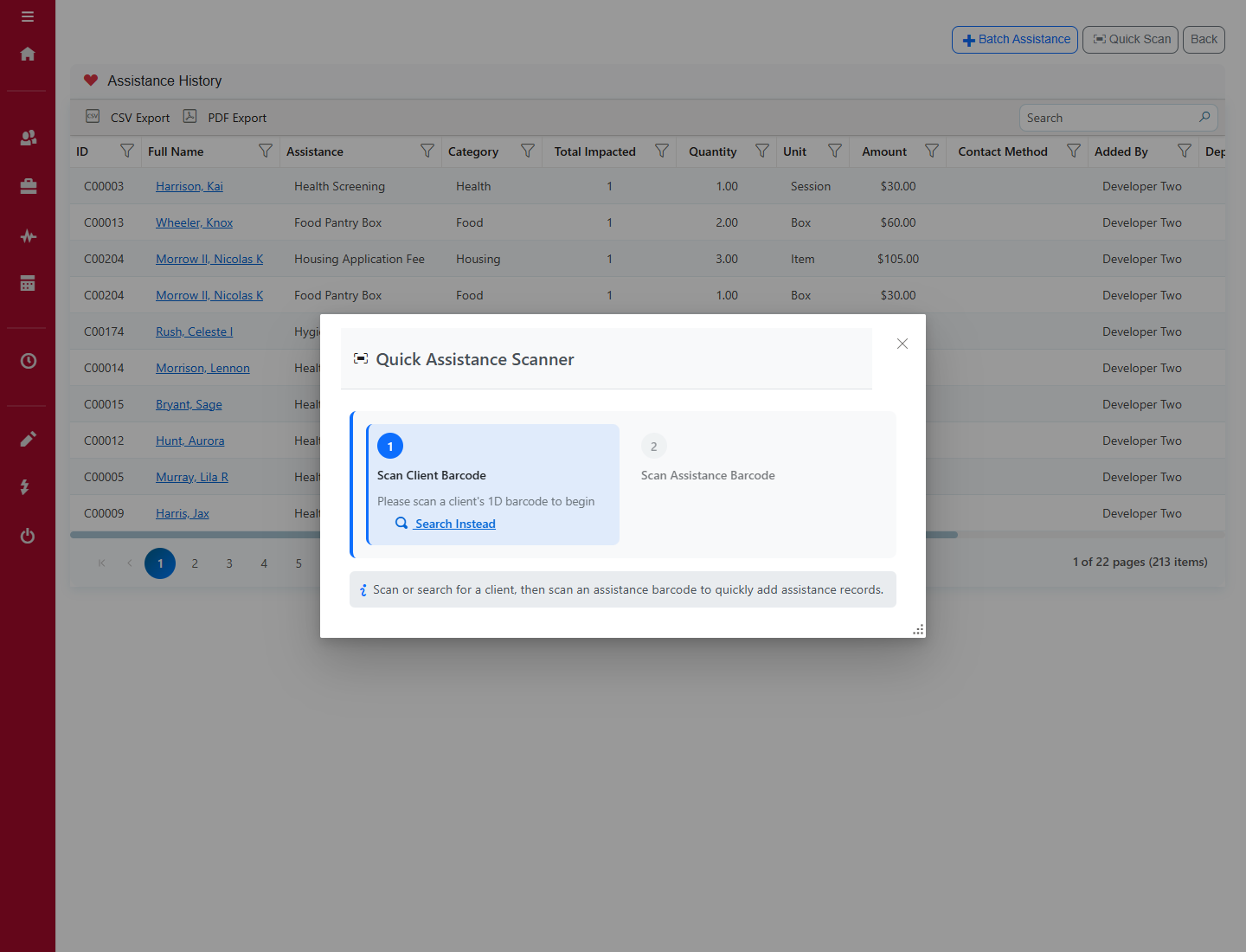
Instead of typing out every detail, a caseworker can scan a client barcode and an assistance barcode to log services in seconds. This keeps the focus on the client, not the computer.
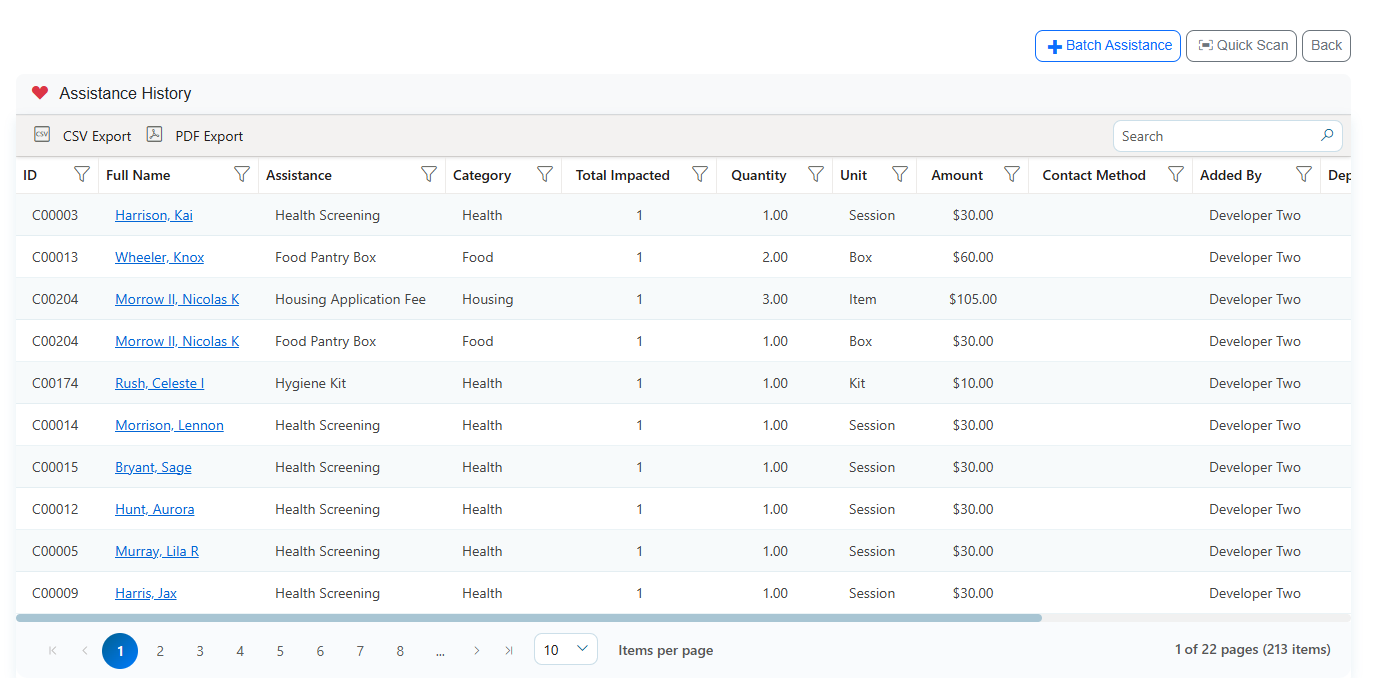
The result is a comprehensive view of assistance provided, which is essential for accurate reporting.
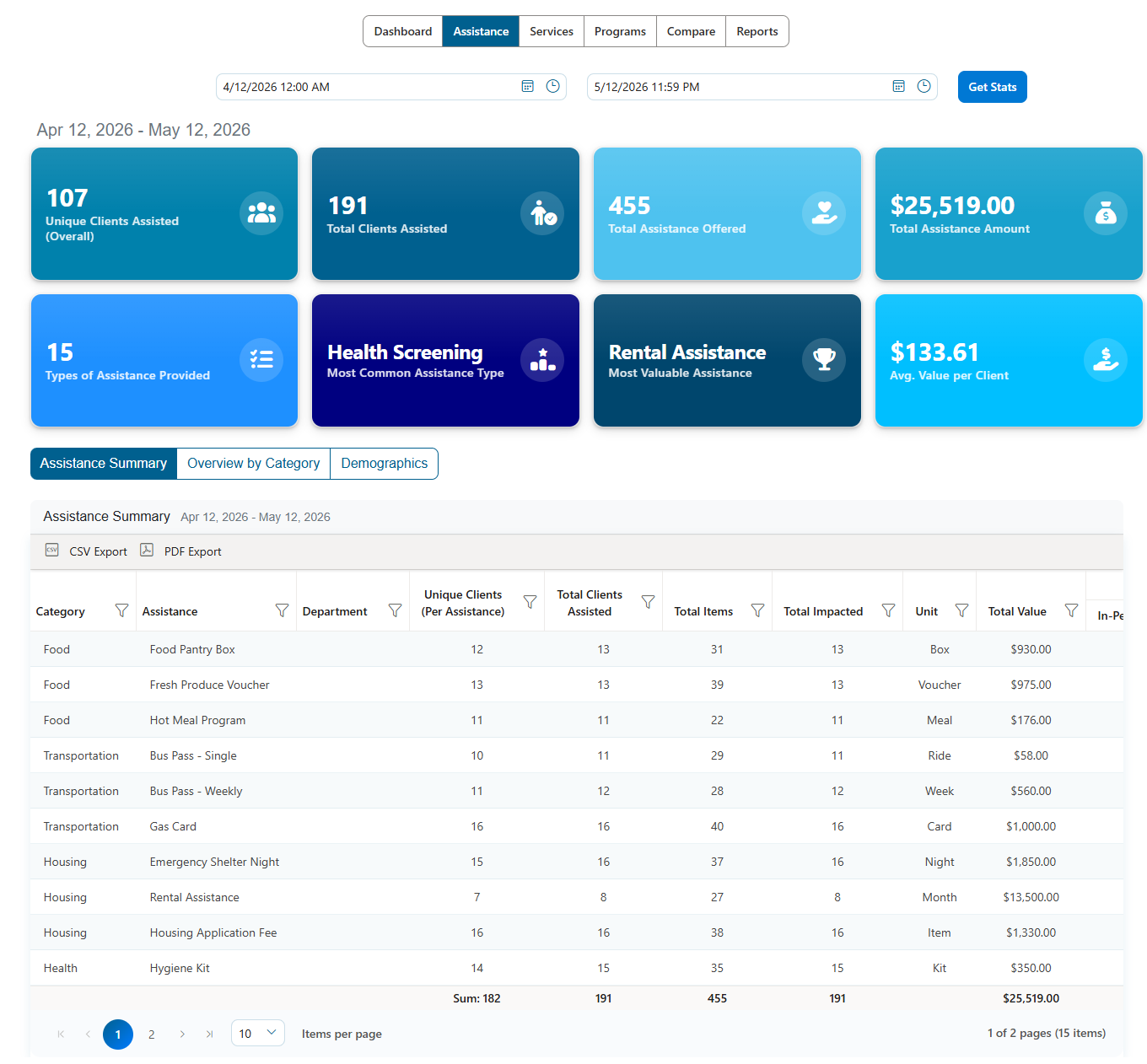
With all data in one place, leadership can access real-time dashboards that visualize impact automatically. No more building reports from scratch.
Take the Next Step
If you recognize these signs in your organization, it may be time to evaluate your current tools. A simpler, more intuitive system can help you reduce administrative burden, improve data accuracy, and better demonstrate your impact to funders.
To see how a refreshingly simple case management platform can transform your workflow, explore the available options at https://cohoist.com/pricing.
Ready to put this into practice?
Cohoist gives your team clean intake, fast service tracking, and funder-ready reports — without the clutter of traditional systems. See how simple it can be.