The High Cost of Volunteer Turnover on Client Continuity in Faith-Based Programs
When a dedicated volunteer steps away from a faith-based program, the loss isn't just a gap in headcount. It is a fracture in the trust you've built with the families you serve.
If you are in this stage, you've already been through a lot. You've probably felt the frustration of duplicate records cluttering your database, the anxiety of missed follow-ups, and the exhaustion of trying to piece together a client's story from scattered notes and sticky pads.
Volunteer turnover is inevitable in the ministry world, but the damage it causes to client continuity doesn't have to be permanent. The real cost isn't just the time spent recruiting; it's the erosion of service quality and the risk of vulnerable clients falling through the cracks.
Here is how high turnover disrupts your mission and practical steps to protect client continuity, even when your team changes.
The "Invisible" Knowledge Gap
In faith-based ministries, a significant portion of your service delivery relies on volunteers who hold institutional knowledge in their heads, not in your system. When a volunteer leaves, they take that context with them.
- Lost Context: A long-time volunteer knows that "John" is sensitive to phone calls in the morning or that "Maria" needs a specific type of food assistance during school breaks. This nuance rarely makes it into a standard intake form.
- Broken Trust: Clients often bond with specific volunteers. When that person leaves, the client may disengage, assuming their needs are no longer being met.
- Repetition Fatigue: New volunteers or staff often have to ask clients to repeat their entire history because the previous volunteer's notes were vague, private, or non-existent. This is demoralizing for the client and inefficient for the new volunteer.
How Data Fragmentation Exacerbates Turnover
When your data lives in spreadsheets, paper files, or personal email inboxes, turnover becomes catastrophic. If the volunteer who managed a case kept their records on a personal laptop that the team no longer has access to, that client's file is effectively gone.
Even if the data exists, it is often siloed. One volunteer tracks attendance in a binder, another tracks financial assistance in Excel, and a third tracks counseling sessions in their head. When turnover happens, there is no single source of truth.
This fragmentation creates a vicious cycle:
- High turnover leads to fragmented data.
- Fragmented data makes onboarding new volunteers slower and more difficult.
- Slow onboarding leads to lower quality service and higher burnout among remaining staff.
- Burnout drives more turnover.
Practical Strategies to Protect Client Continuity
You don't need a massive budget to mitigate the impact of turnover. You need a system that captures knowledge at the point of service, not at the end of the month.
1. Centralize the Client Story
Every interaction, note, service delivery, and document should live in one shared place. This ensures that a new team member, whether it's a volunteer, a part-time staff member, or a full-time employee, can pick up exactly where the last person left off.
A centralized system allows you to view the full timeline of a client's journey. New volunteers can read past notes to understand the client's history, preferences, and previous interventions. This reduces the need for repetitive intake questions and helps build rapport faster.
2. Automate Follow-Ups and Reminders
Volunteers often leave because they feel overwhelmed by administrative tasks. Manual follow-ups are the first thing that gets dropped when a volunteer departs.
Implementing automated reminders ensures that no client falls through the cracks, regardless of who is managing their case. Whether it's a check-in call, a service renewal, or a milestone review, automated workflows keep the continuity of care intact.
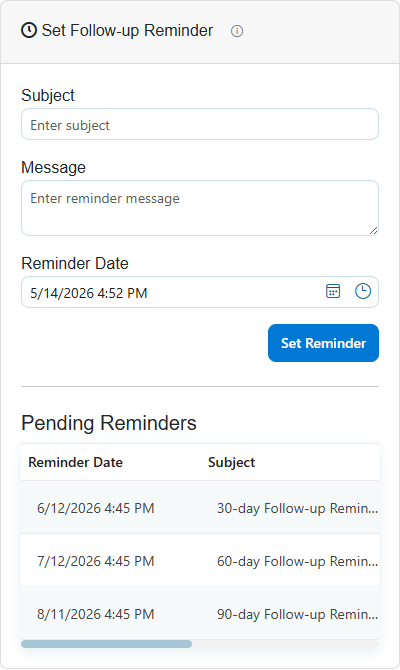
Setting automated follow-up reminders ensures that client care continues seamlessly, even when volunteer schedules change.
3. Clean Up Duplicate Records
High turnover often leads to data hygiene issues. When new volunteers enter data without a clear view of existing records, duplicate profiles emerge. These duplicate records fragment the client story, making it harder to track progress and increasing the risk of sending conflicting information to the same person.
Regularly auditing and merging duplicate profiles ensures that every client has a single, comprehensive record. This clarity is essential for new volunteers who need to understand the full scope of a client's needs without confusion.
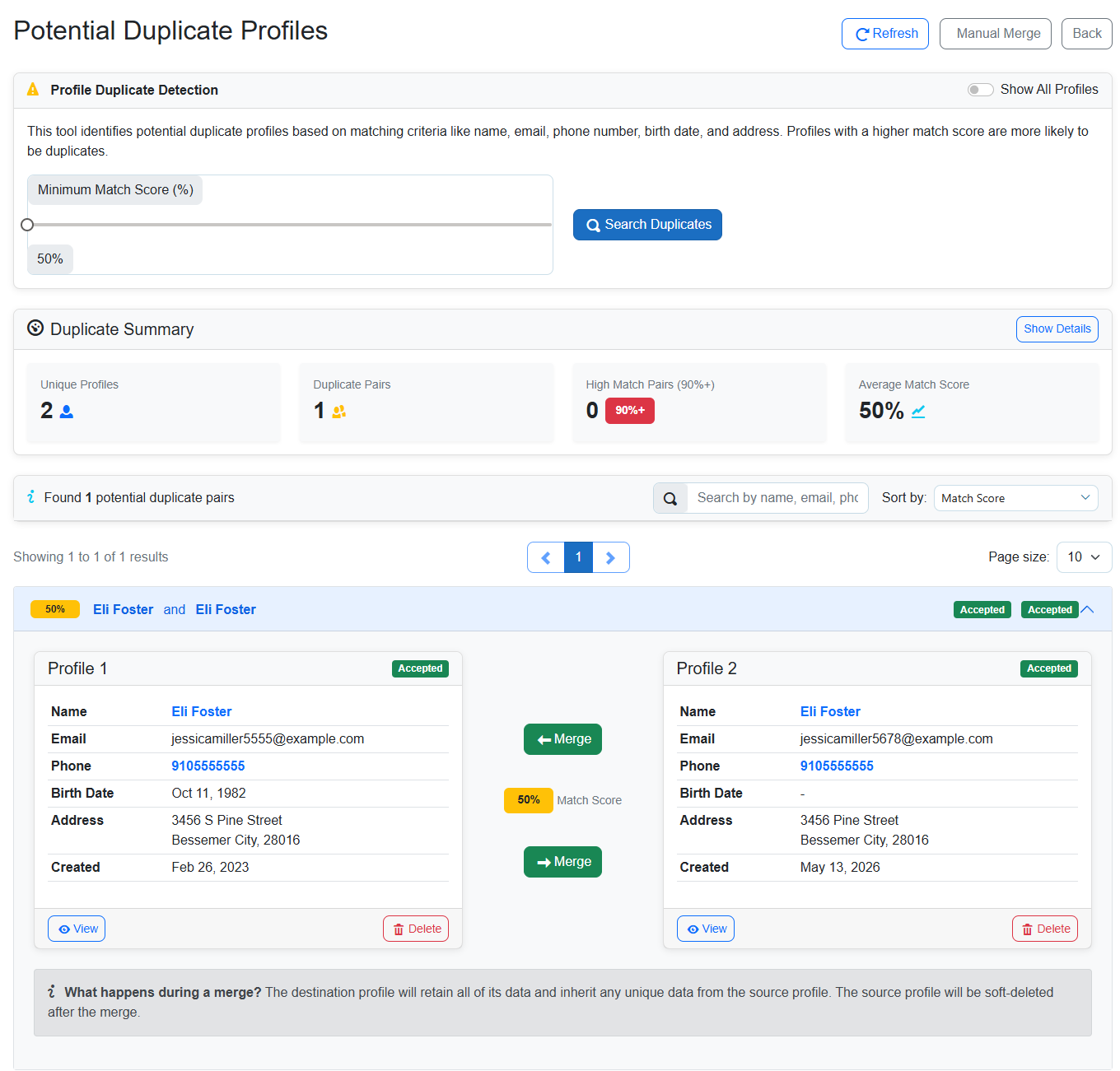
Identifying and merging duplicate profiles prevents fragmented client histories and ensures accurate service tracking.
Measuring the Impact of Continuity
When you stabilize your client records, you gain visibility into service outcomes. Leadership can see completion rates, average days to resolution, and the most common services provided. This data helps you allocate resources more effectively and demonstrate impact to funders.
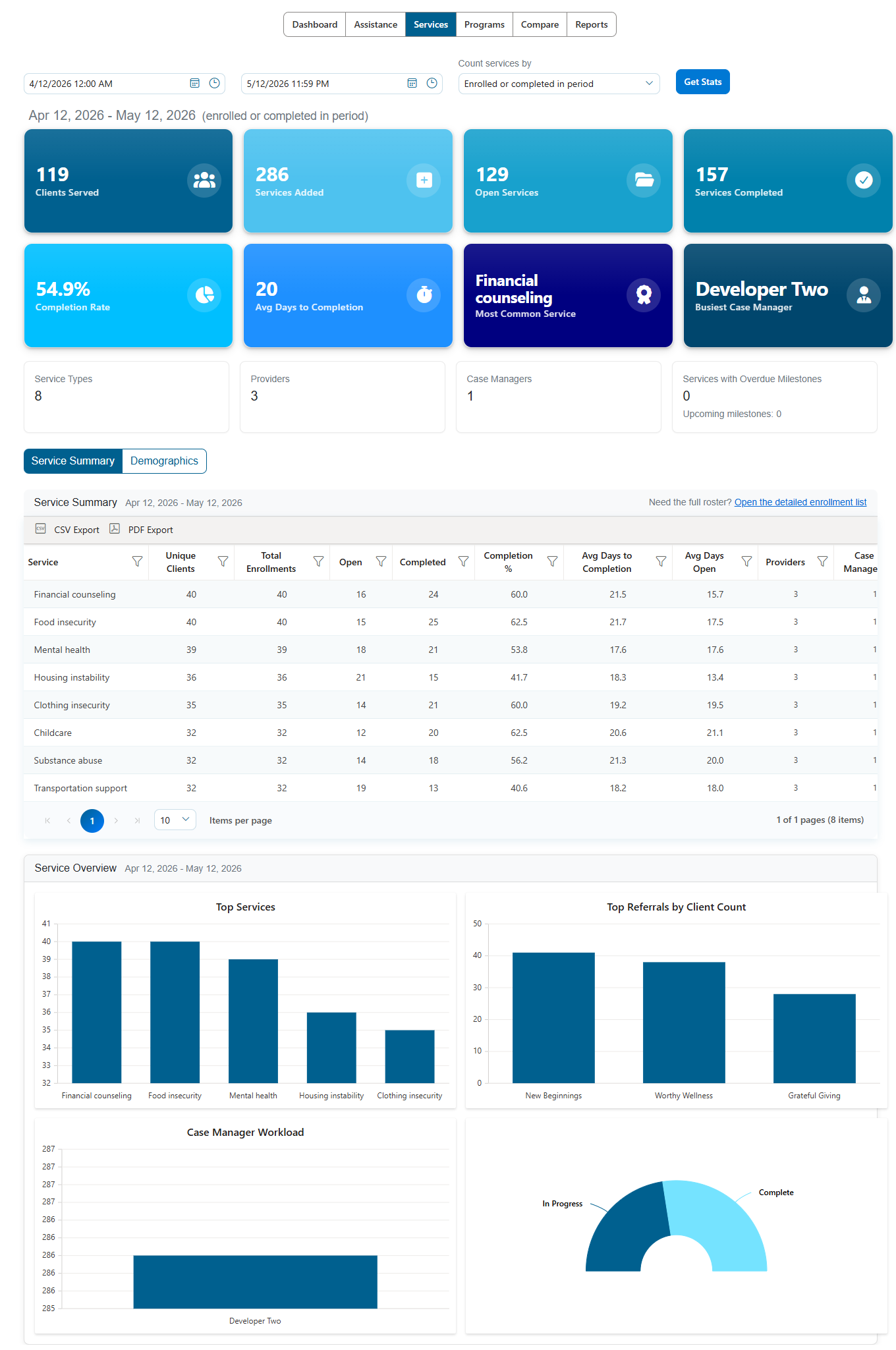
A clear dashboard provides leadership with actionable insights into service performance, helping to optimize resource allocation and improve client outcomes.
Building a Resilient Foundation
Volunteer turnover will always be a part of the nonprofit and ministry landscape. However, the impact on your clients doesn't have to be. By centralizing data, automating routine tasks, and maintaining clean records, you create a resilient system that outlasts any individual volunteer.
This approach reduces the administrative burden on your remaining team, allowing them to focus on what matters most: serving your community with compassion and consistency.
Tools like Cohoist are designed with this reality in mind. By offering a refreshingly simple case management software for nonprofits, it helps faith-based organizations capture client stories in real-time, automate follow-ups, and maintain data integrity without requiring technical expertise. This simplicity accelerates volunteer onboarding and ensures that every new team member can contribute effectively from day one.
If you're ready to stop worrying about who holds the keys to your client data and start building a more resilient, continuity-focused ministry, explore how a streamlined approach can transform your operations.
Start your free trial of Cohoist to see how simple case management can protect your client relationships.
Ready to put this into practice?
Cohoist gives your team clean intake, fast service tracking, and funder-ready reports — without the clutter of traditional systems. See how simple it can be.