Last-Minute Funder Reporting Nightmares: Why Nonprofits Dread End-of-Quarter Chaos
It's the second week of the quarter. Your caseworkers are busy helping clients. Then, the email arrives.
"A quick update on our impact metrics for the funder due in three days."
Suddenly, your team stops serving clients and starts chasing data. You spend days exporting spreadsheets, fixing formatting errors, and trying to reconcile numbers that don't match. The stress is high, the quality of the report is questionable, and your staff is burned out before the next quarter even begins.
Yes, this is an administrative inconvenience, but it's also a risk to your organization's reputation and future funding. When reporting becomes a chaotic scramble, it signals to funders that your operations may be unstable. It steals time from the people who actually do the mission work. The goal is to correct this so your mission doesn't take a backseat because of heavy admin burden.
The root cause is a lack of integrated systems. When data lives in silos, reporting becomes a manual reconstruction project.
The True Cost of Manual Reporting
Many nonprofits still rely on legacy systems, disjointed spreadsheets, or memory to track client outcomes. While these methods might have worked for smaller programs, they break down as your organization grows.
The cost of this manual approach goes beyond just staff hours.
- Delayed Insights: By the time you compile a quarterly report, the data is already outdated. You're looking in the rearview mirror instead of steering the ship.
- Inconsistent Data: Different staff members track information differently. One case manager might log "Food Assistance" while another logs "Emergency Food Aid." When you try to aggregate this data, the numbers don't add up, leading to errors in your final report.
- Audit Anxiety: When you can't instantly pull up a client's full history or verify a service date, you're vulnerable during audits or funder reviews. This uncertainty creates a low-level background stress for every staff member.
The goal is to make reporting a byproduct of good case management, rather than a separate, painful task.
How Fragmented Workflows Create Reporting Gaps
Reporting nightmares usually stem from gaps in the workflow between intake and impact. If your system doesn't capture data at the point of service, you'll have to go back and fill in the blanks later.
Consider these common scenarios:
- Service Logging is Too Slow: If a case manager has to click through ten screens to log a single service interaction, they'll skip it or do it poorly. This leads to missing data that you can't recover later.
- Notes Are Trapped in Silos: Qualitative impact is just as important as quantitative metrics. If case notes are stored in separate files or paper binders, you can't easily summarize client stories for a funder report.
- No Real-Time Visibility: Program directors often don't know the status of services until the end of the month. This prevents them from catching errors early or adjusting strategies in real time.
When these gaps exist, the end-of-quarter period becomes a frantic attempt to reconstruct the story of your impact from scattered fragments.
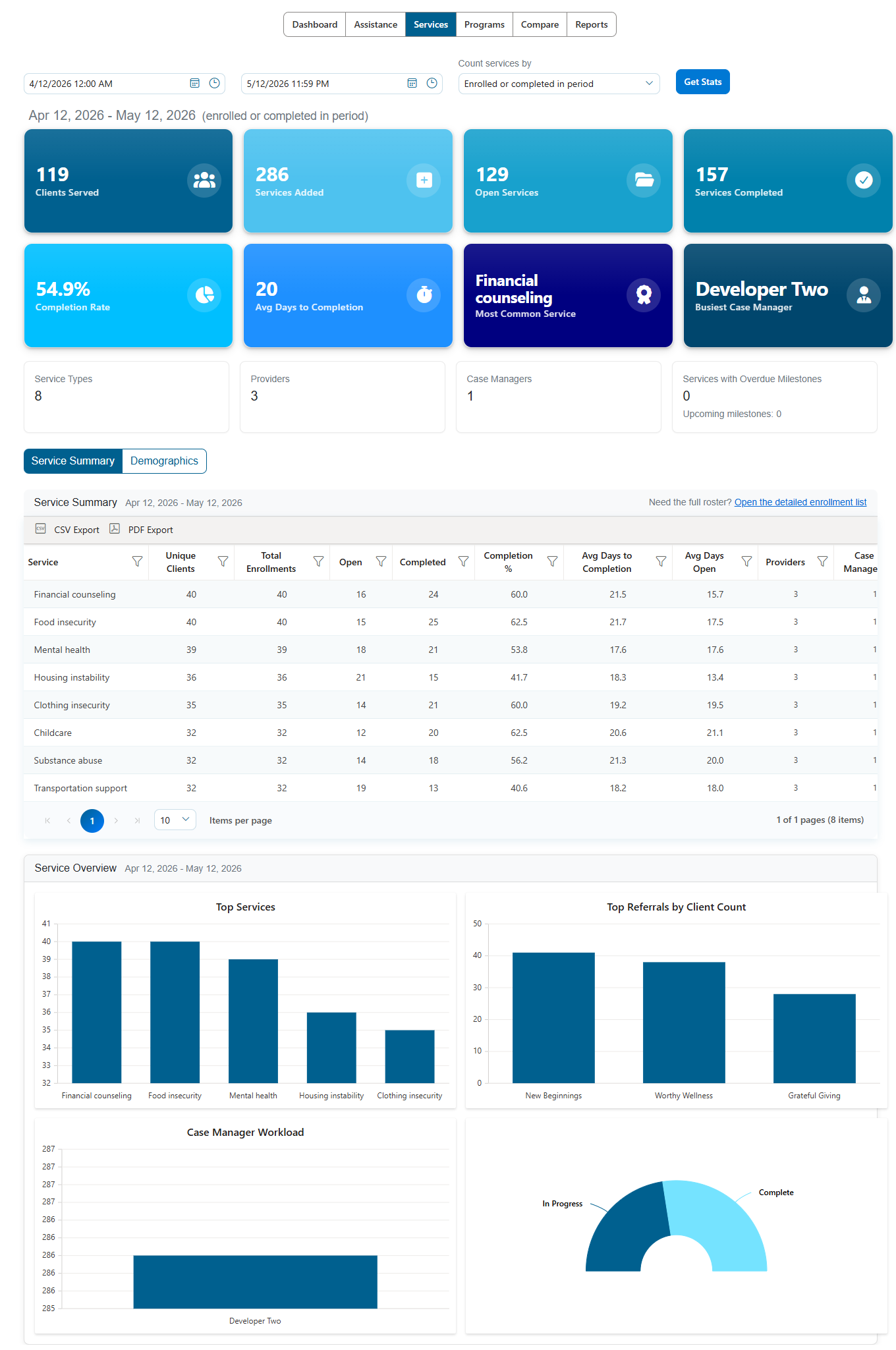
A robust case management platform solves this by making data entry frictionless. When staff can log services quickly and accurately, the data is ready for reporting automatically. The service dashboard provides immediate visibility into completion rates, average days to completion, and case manager workload. This allows leadership to spot trends and address issues long before a funder deadline looms.
The Hidden Risk of Unmerged Client Histories
You cannot report on what you cannot trust. Whether it's from duplicate records or fragmented data, the danger is incomplete client histories.
When a client interacts with your organization through multiple channels or with different staff members, their story gets split. One case manager might have notes about housing instability, while another has records of employment services. If these records aren't unified, you see only a fraction of the client's journey.
This fragmentation creates two critical problems for reporting:
- Incomplete Impact Stories: Funders want to see holistic outcomes. If your data is siloed, you might report that you provided 500 job placements, but fail to capture that 30% of those clients also received housing support, which was the key factor in their retention. You lose the ability to tell the full story of your effectiveness.
- Inaccurate Resource Allocation: If you can't see the full history of a client's needs, you can't accurately assess which services are most effective. You might over-invest in a service that appears popular in one silo, while ignoring a critical need that's scattered across other departments.
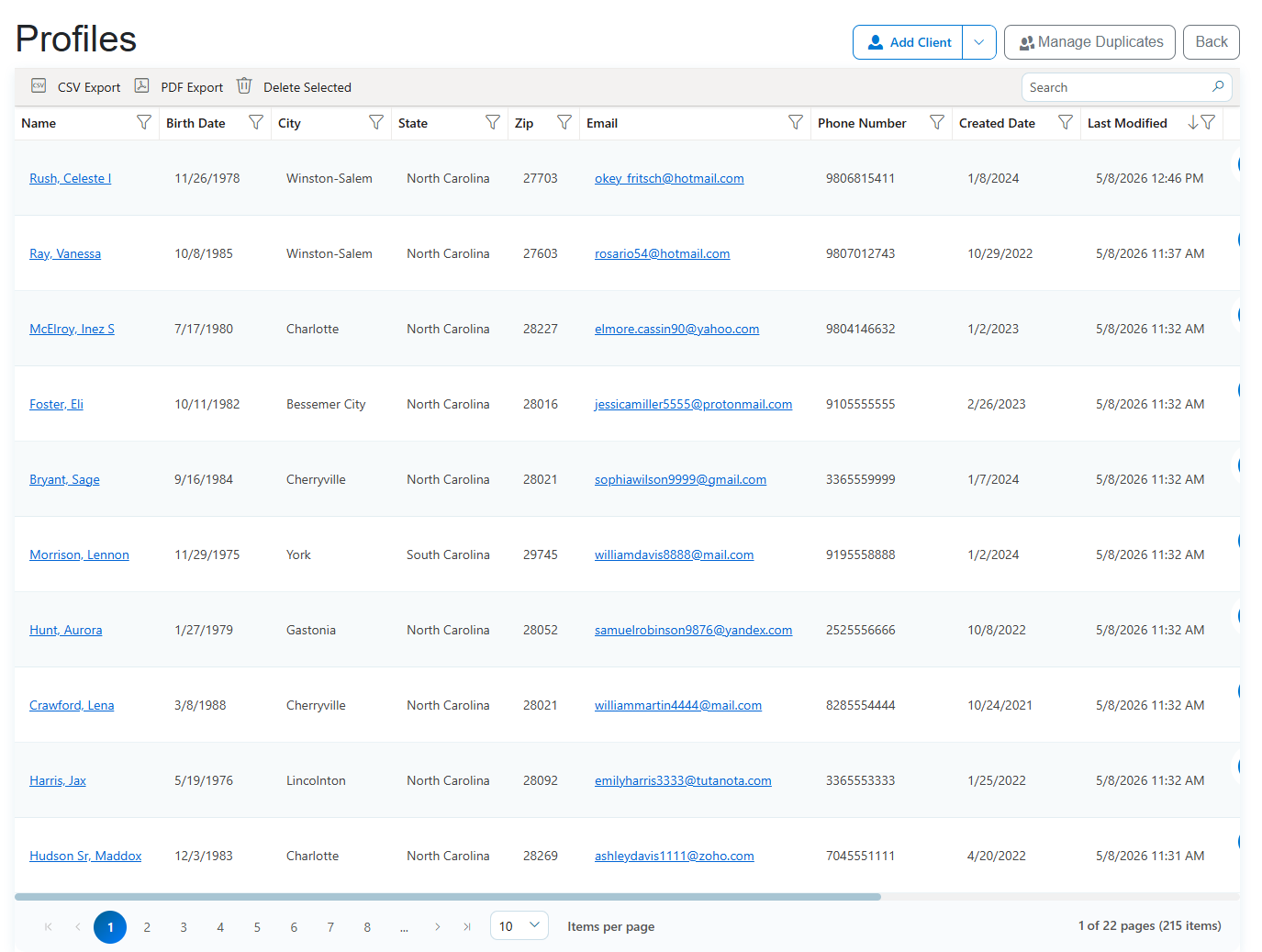
A unified platform ensures that every interaction, note, and service is tied to a single, comprehensive client profile. This allows you to view the entire client journey at a glance. When you pull a report, you're summarizing complete, verified client stories. This clarity transforms your reporting from a guesswork exercise into a precise reflection of your impact.
Building a Funder-Ready Reporting Culture
The solution to end-of-quarter chaos is working smarter throughout the quarter. This requires a shift in how your organization views data.
Your data is the evidence of your impact. When you treat data collection as a core part of service delivery, reporting becomes effortless.
Here's how to build that culture:
- Simplify Data Entry: Make it easier to log a service than to skip it. Use mobile-friendly interfaces, barcode scanning for inventory, and quick-entry workflows.
- Standardize Categories: Use consistent drop-down menus for service types and outcomes. This ensures that data is comparable across different case managers and time periods.
- Automate Follow-Ups: Use automated reminders for case managers to update client statuses. This keeps records current without manual prompting.
- Visualize Impact Regularly: Use dashboards to review performance weekly, not just quarterly. This normalizes data review and makes large-scale reporting less daunting.
When your daily workflows are designed with reporting in mind, the end-of-quarter process transforms from a nightmare into a routine check-in.
Streamlining Assistance Tracking for Clearer Impact
For many nonprofits, a significant portion of their impact is measured in tangible assistance provided. Whether it's food pantry boxes, bus passes, or hygiene kits, tracking these items accurately is crucial for funder reports.
Manual tracking of assistance often leads to errors. Staff might forget to log an item, or they might miscount inventory. This makes it difficult to report on the total value of assistance provided or the most common types of aid offered.
A dedicated assistance tracking module allows you to log items quickly and link them directly to client profiles. This creates a clear audit trail and provides accurate data for impact reports. You can see exactly how many unique clients were assisted, the total value of assistance, and which items are most in demand.
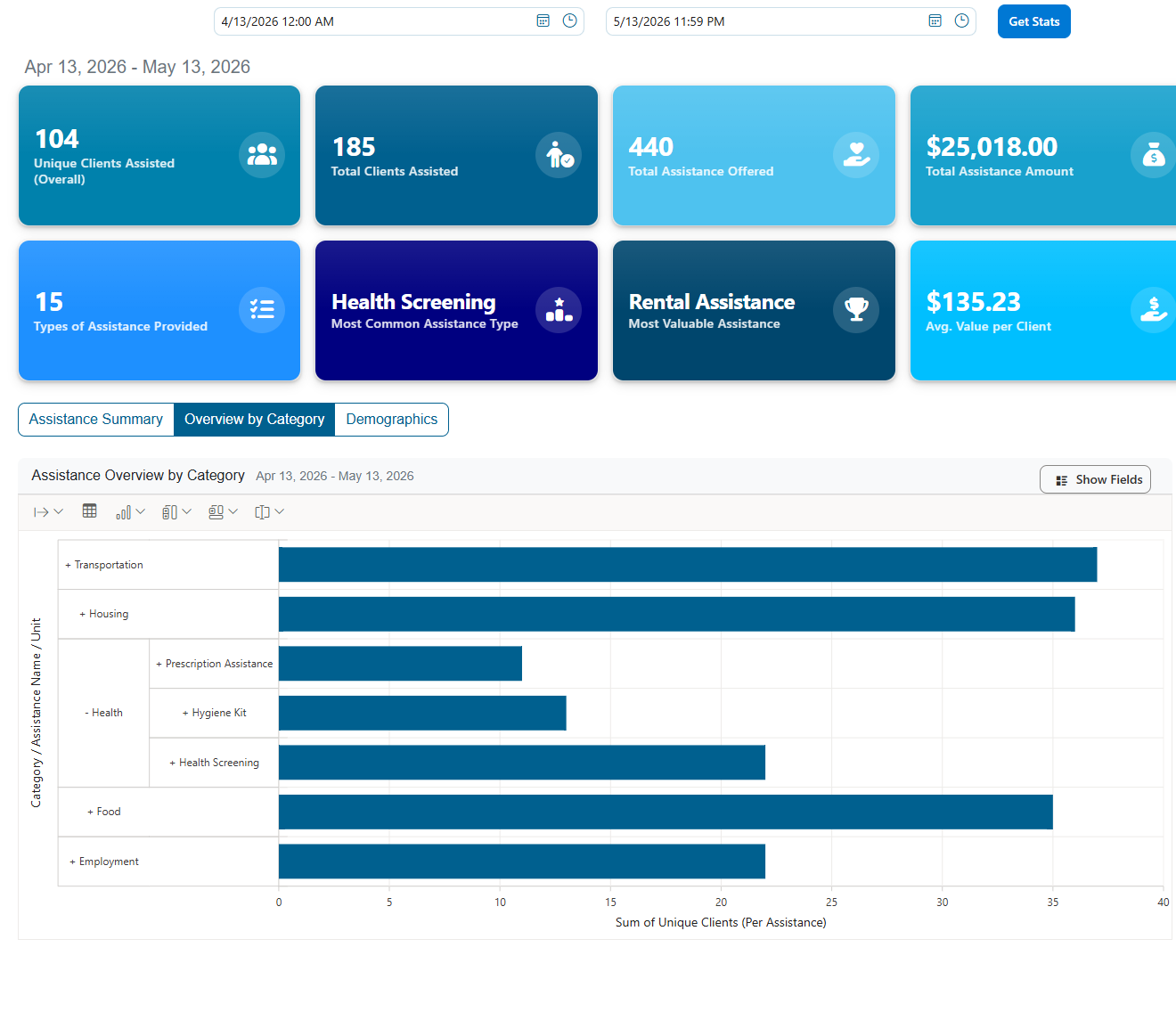
With a centralized assistance dashboard, you can generate detailed summaries by category, department, or demographic. This level of granularity allows you to tell a compelling story to funders about where their money is going and who it's helping. You can move beyond vague statements like "we helped many people" to specific, data-driven insights like "we provided 500 emergency shelter nights to 120 unique families."
From Chaos to Confidence
End-of-quarter reporting doesn't have to be a source of dread. By addressing the root causes of data fragmentation, unmerged histories, and manual entry burdens, you can transform your reporting process.
The key is to choose a system that supports your workflow, not one that complicates it. A modern, intuitive case management platform can help you capture data accurately at the point of service, automate routine tasks, and generate funder-ready reports with a few clicks.
This shift allows your team to focus on what they do best: serving clients. It gives leadership the confidence to share your impact with clear, accurate, and timely data. It turns your reporting into a strategic asset that demonstrates your organization's value and reliability.
If you're ready to eliminate the chaos of manual reporting and build a more efficient, data-driven nonprofit, explore how a streamlined approach can work for your team.
Ready to put this into practice?
Cohoist gives your team clean intake, fast service tracking, and funder-ready reports — without the clutter of traditional systems. See how simple it can be.